
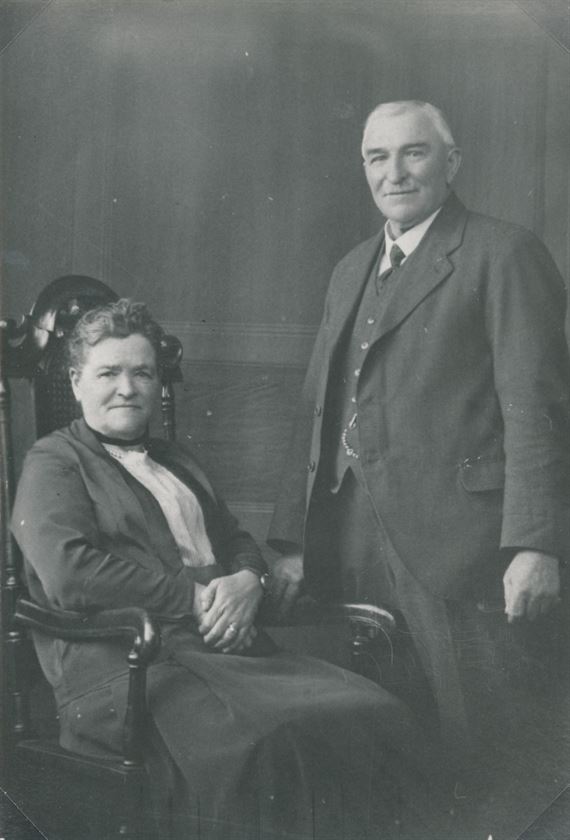
Fred Dickman recorded his memories on five tapes which were later painstakingly transcribed by his son-in-law, Mike Nichols. They are a remarkable snapshot of the daily life of Hickling in the early 1900s – his storytelling style is beautifully detailed but it is also kind and funny and generous; ENJOY!
- Frederick (Fred) John Dickman was born in Hickling 9th June 1905. In the 1921 census he is recorded as assisting his father on his farm. Mike Nicholl’s family tree explains that he was a poultry farmer and corn merchant. He died in Nottingham on the 15th August 1991.
- Doris Elizabeth Woolley was born in Hickling 30th December 1900. Her family farmed at Barland Fields on Bridegate Lane. She died in July 1974 at Highfield Farm, Long Clawson.
- They married 10th April 1928 in the Methodist Chapel in Hickling (consequently, there are no marriage entries in the Hickling Church registers and the online records simply show as being in the Bingham District).
- Mary (Dickman) Nichols was Fred and Doris’ 2nd daughter.
FREDERICK JOHN DICKMAN 1905-1991
The Life story of Frederick John Dickman born at Beech House, Hickling, 9th June 1905 as transcribed word for word from 5 sets of tapes which he made in the late 1970s.
In attempting to write one’s life story it’s best to start with the first things that can be remembered. I would probably be 4 yrs old. Like at most farm houses in those days my parents always killed one or two pigs a year and cured their own bacon. Not only for themselves, but also there would be a girl who helped mother with the Stilton Cheese making and always one or two youths living in helping on the farm.
When the day of slaughter arrived it seemed too much for me, though I remember when Mr Gershwin Parr arrived with a crutch and a basket full of knives and the copper full of water already boiling to scald the hairs off the animal, I would watch for an opportunity to hide away out of sight and almost out of hearing of the squeal of the unfortunate pig. I would then bravely reappear when it was dead.
The next day, cutting up day, I would be in great form, ready for anything, complete with white apron, helping or hindering my mother to make the Pork Pies, sharing out the few fries, always one for Grandma Doubleday and a bit for old Mrs Bruin which I used to take to her. They say that the only thing you can’t eat from a pig is its squeal.
Another episode was when Frank Wright, one of the farm hands, got me to help milk a quiet old cow. With his help about one and a half pints of milk was produced in a bucket a bit too big for me. Frank now said “go and show your mother what you have achieved”. No doubt pleased to show it off to her I got in the house to find Mother upstairs, front stairs at that, so up I go with my big bucket, mother heard me coming and came to the top of the stairs, me halfway up showing off my handiwork . Proudly I turned to go down and the big bucket went up and tipped the milk all the way down the stairs.

Frank Wright was always full of tricks. I think he was mostly on my side but he let me down on one occasion when I refused to go to Sunday school and mother confined me to the front room for the period. I must have told Frank that it was better than Sunday school and he passed it on. So the next week I had to be taken to the school room with Mother on one side, cousin Dot Munks on the other. Mother slipped off home as soon as the Rev Canon Ashmore came to assist. Dot often repeated the Rev’s remarks as I was no doubt making a struggle of it. He said, “we mustn’t let him go Florence”.
Afterwards I was a regular attendee at Canon the Rev Ashmore’s Sunday school and went on to become one of his surplice Choir boys along with Jack and Fred Woolley, Len and Ted Parnham, Howard Luker and more. In the men’s section I remember Mr Hill, Albert Rose, Albert Burnett, Donnie and Albert Simpson. My gum he could make a noise. Albert was Canon Ashmell’s coachman. He drove an enclosed trap complete with top hat, coat and brass buttons Mr Hill was head gardener. My word what a garden that was, not a thing out of place, however did he do it, mowed all the lawns with a push mower and cut the hedges with a razor sharp half moon spade.
The thing that stood out as soon as you entered through the white gates, with trees and shrubs either side to give the place privacy, was a round lawn with a carriage drive round it leading to the front door and out the other way. The Vegetable and Flower garden was just as well with the aid of spades, fork and small hand tools.
One can’t say the word pranks without connecting it with Fred and Jack Woolley [Cousins]. They were the ringleaders with a good few of us as willing helpers. The games we always played were “Pin and Cotton”. We use a reel of cotton, tie a pin on the end and 6 inches away tie a button. Unwind the cotton to a safe distance and some young muggins has to stick the pin into the woodwork of somebody’s window. By working the cotton you could make the button tap tap on the glass. If someone looked through the curtains you stopped only to restart as soon as the curtain closed. If someone came out, pull hard and out came the pin and nothing could be seen.
I remember one night doing Mr Ted Woolley’s house [Jack and Fred’s father] l had to put the pin in that night. After a few raps the pin came out. I summoned up enough courage to put it in again and out came Mr Woolley. Everyone took off and ran for their lives, I ran up the grass, along the hedge and turned round and walked towards him on the pavement and said “where’s that lot off to” and he said “I don’t know but I’ll catch up with them”. After a bit we regrouped and chose the next place, George Squires’ window in Chapel Lane. You had to sit on a wall and reach over to the window my job again. Someone legged me up and I was just about to put the pin in the window when two strong arms grabbed hold of me from the other side. It was Ted Woolley. He said, “I thought you were one of the gang, well I have got you now,” then he took me into Mr Squires’ house, I didn’t say that his son Archie was one who had got away. However after a period when they got quite cross they fixed me up with some apple pie and cream. It was just mischief, not real vandalism that we hear about today.
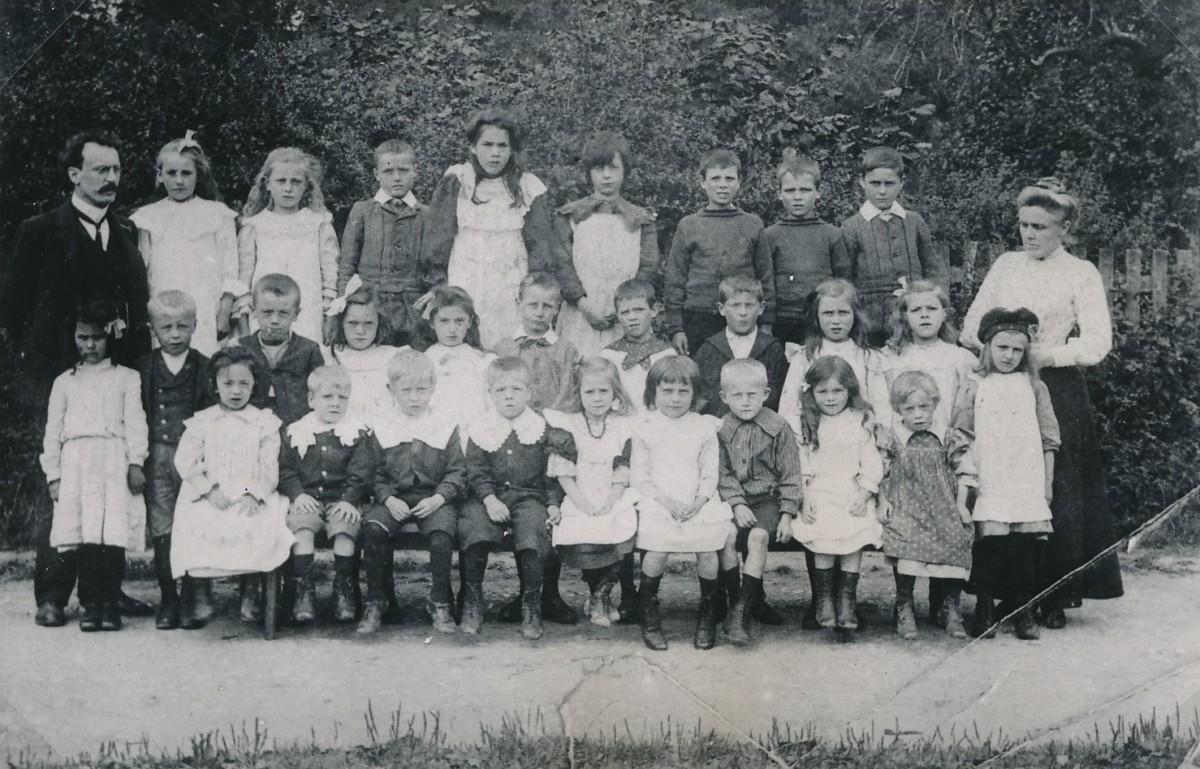
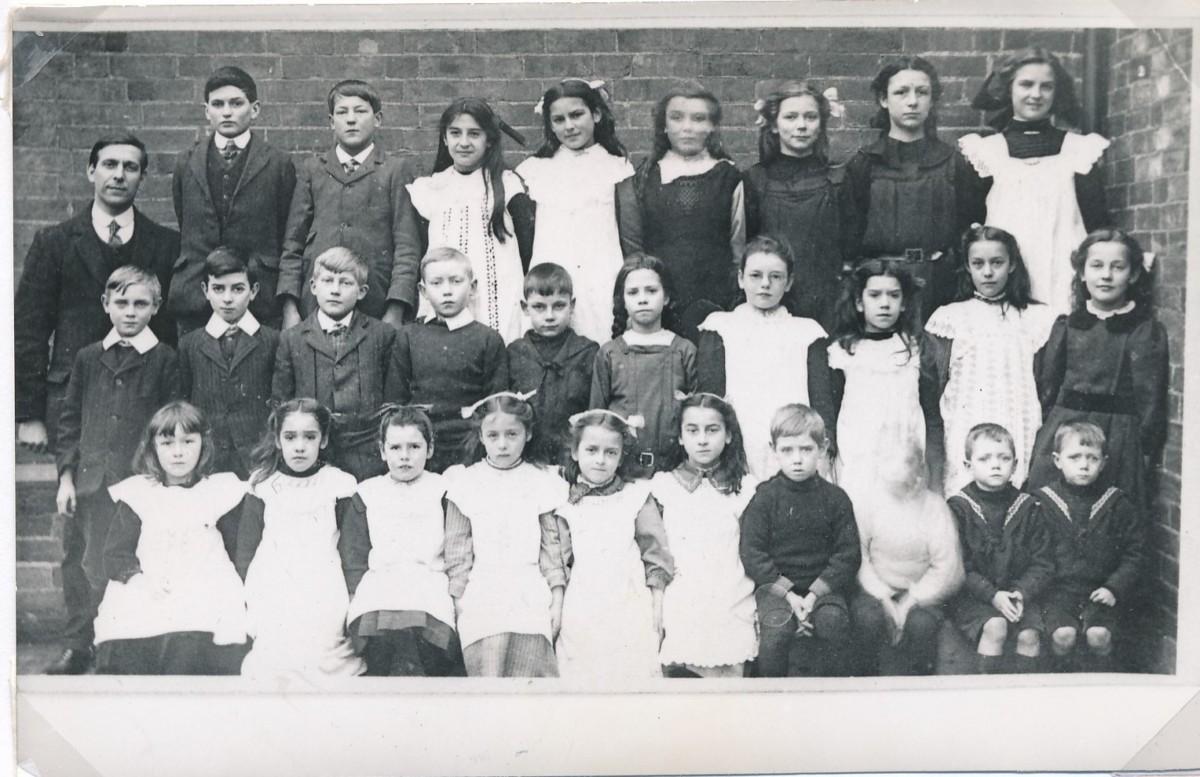
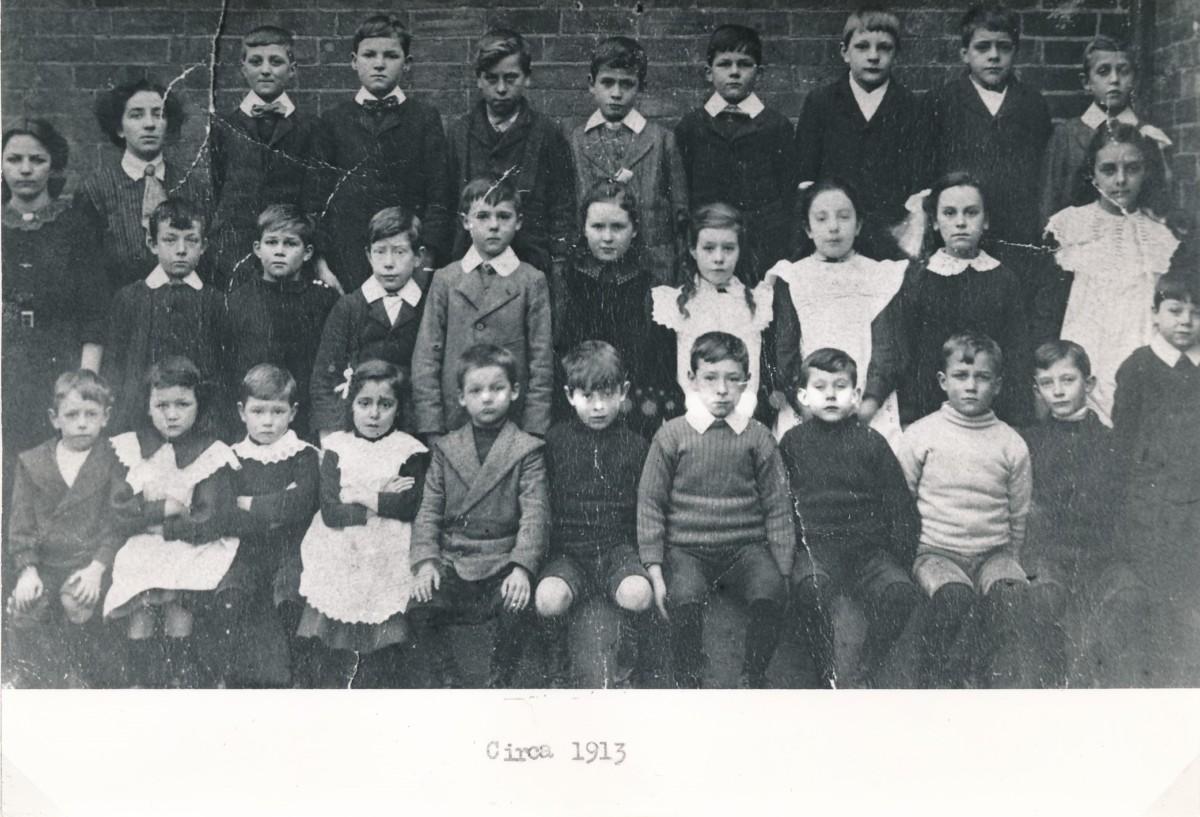
At this stage of my life I can’t pass without mentioning two of my very close school friends Olive Squires and Wilfred Parr, “Kelly” as we used to call him. The schoolteacher Mrs Laws had a reputation for being very bossy. No doubt I had heard them say this and was nervous to go. Olive took me by the hand the first morning and then all was well. For a long time she always called at our house at 10 to 9 and we went to school together. She was one of a family of five very kind and considerate girls and they remained so in later years. More about that later. The other chap, Kelly a cousin of Olive’s and son of Gershwin Parr, the pig killer, had the unfortunate luck to lose his mother at an early age. Being almost next door and close friends he spent a lot of time with us, in fact he almost had a second mother at our house. His grandfather was village bandmaster and his father also played in the band and kept some instruments in his house. I remember we had wonderful fun in one of their bedrooms when his father was out trying to play them; it was always the biggest we could find.
There was always a good team of bell ringers at Hickling in those days. The leader was Charles Munks, Dot’s father and my uncle. He married my mother’s sister Ruth. The team as I remember them was his son Tom, Gershwin and Arthur Parr, Percy Collishaw and Mr Hill. They had a practice ring at night most weeks and would take one or two of us boys along to have a pull. Mr John Mann used to keep the key to the church and on passing his house they would say to one of us fetch the key and also to take it back after. To give us a lesson the procedure was to tie the clapper of the bells so as not to disturb the residents. This seemed so easy that Curly and myself thought we would have a go on our own one night. So off we went, please can we have the key for ringing Mr Mann? We went and tied the bells up but not to form. We rang the two small bells up alright but couldn’t get one down again. So we went up and took the rope off the other and came down and had another try. We were just trying to get it down when the rope came off and the bell began to spin. We were so surprised we just ran off and left it. This was very dangerous as the rope went flying round the room fetching everything off the walls. We could have been badly hurt. The key was quickly returned to Mr Mann and we went home. We had to admit afterwards and apologise for the damage.
Another game we played was brook jumping. I was supposed to be good at this so the boys from the lodges who brought dinner to school, no cooked meals in those days, would eat it quickly and get to the brook long before I could get there, find a wide place and say “Jump this”. Sometimes if I thought it looked possible I would go ahead and jump. One day they found a wide place with 3 bushes in front and very deep water. They made out that they had jumped it by making foot marks on the far bank .Eddie Wog was a keen rival of mine and I said I’d see him jump it and would follow. Nothing happened at dinner but the lads persuaded him to have a go later. This was the only thing to do to make me believe them so off we went and after a few refusals Midi made a mighty leap, clipped the top of the hedge and nose dived into the brook. The next thing was how to get him dry enough to go home, so off came the lot and after wringing out his clothes hung them on the rails of the swing bridge in Mr Edgson’s field, now called Harles acre. Midi meanwhile was running round in the sun naked to dry off when we saw Miss Wakely coming to feed the hens. She had to pass over the footbridge so Midi lay flat under it and we took his clothes into the next field. She walked over to feed her hens and back and never knew he was there.
Two characters of the village we had fun with were Tommy and Shot. Tommy Jeffries was the Chimney Sweep. He would be off with his pony very early all round the district and when we were at play in the school yard he would often be tending his pony on the green. Done for the day he loved to talk of his young days when he said he was sent up the chimneys to clean them. When we asked him, ’cause he was very fond of mushrooms, where to find the best mushrooms, he would say “At the top of Willoughby Church”.
“Shot” was the other one. He used to sleep rough in barns and to get a bit of food and ale, which seemed his main diet. The “beer off” was opposite the school yard and he had to come off the unlicensed premises to drink. He would do this in Robert Parkes’ gateway. We kids had great fun teasing him until he ran us round the playground and often into the classroom.
The tall house opposite the school had been in the Parkes family for many, many years and still is. Mr and Mrs Robert Parkes two sons Willie and Wally and sister Sally lived there and looked after a truly family farm. None of them were married and I remember how methodical they were in their work. They used to keep cocks and hens at the back of the house and they would set broody hens and sell them with the chicks. One old rooster would come over into our fields sometimes and Kelly and I would try and catch him, put him to sleep and sit him down in Willie’s yard for him to pick up and wake up. The process of putting a cockerel to sleep is by putting his head under his wing, holding him with one hand either side, keep his wings closed and rock him about from side to side for a few minutes. He will stay put for some time.
The teachers at the village school in my day were Mr and Mrs Law. Mrs Law was very strict; she also gave music lessons at night. Mr Law was a much kinder man and very well liked. He was a very good artist, painting etc. his son Eric went on to become the curator at Nottingham Castle the Laws were followed by Mr Tayburn a very stout man. I always remember the walloping he gave me for fighting. His son was later a Church of England Parson. Then there was Mr Pepper, a very energetic man and a bit free with the stick. His son Willie was a great friend of mine. One day we all got a whacking when we arrived back at 2.45 instead of Ipm, we had all been on a paper chase. Then came Miss Hilliard, a cap and gown lady and a gifted teacher. She managed discipline without the cane and if you had done anything wrong she would make you feel so small just by gazing at you, a gaze I caught on many occasions It would go straight through your eye and out the back. She was followed by Miss Hinze just before I left so I didn’t see a lot of her.
Life in those days seemed to centre around Church and Chapel. Almost every child went to Sunday school. My father was a church warden along with Robert Daft. I suppose that is why I remember so well one of the fund raising efforts was for the Church Roof Fund. This was a very big effort for a small village and it lasted for many years. In fact the old roof was infected with the Death Watch Beetle and fell in before the work got started. A portion of the church was boarded off for some time. When the work finally got started it created a lot of interest and I remember being one of the many watching the work. They had to strip the lead, renew the oak beams, board it over and the lead was recast on site. They had a long trough and bench with 6-7inch sides. Sand was first put in and made very smooth. The lead was then heated and poured into the trough quickly to be levelled off with a sort of scraper. This left the lead in a sheet of a certain thickness and when it was cold it was rolled up ready to go back on the roof again.
The fact that my mother and father attended church and were closely connected to its welfare didn’t interfere with or lessen their interest in the Wesleyan Chapel and its well being. They always had a seat there and we would attend sometimes and always at special occasions such as Harvest Festival and Anniversary. Some of the local preachers would stay at our house on the Sunday when they were at Hickling. This being interested in both is perhaps the best form of church unity we hear so much about and find it so difficult to attain.
The usual Sunday school outing now is in a bus to somewhere, in those days at Hickling it was in our fields on the Monday after the anniversary on the Sunday. A cricket match with about 20 each side started at 2pm with a break for a service at 6pm and resume after. All the children and parents would come and watch or play games. Many of the old scholars will remember the scramble for nuts when my father brought out a bag of them and scattered them in the grass. Some of the names of the families which made the day a success were the Shiltons, Simpson, White, Keyworth, Walker, Squires, Woolley, Burnett. I am sure I have missed some out and do apologize.
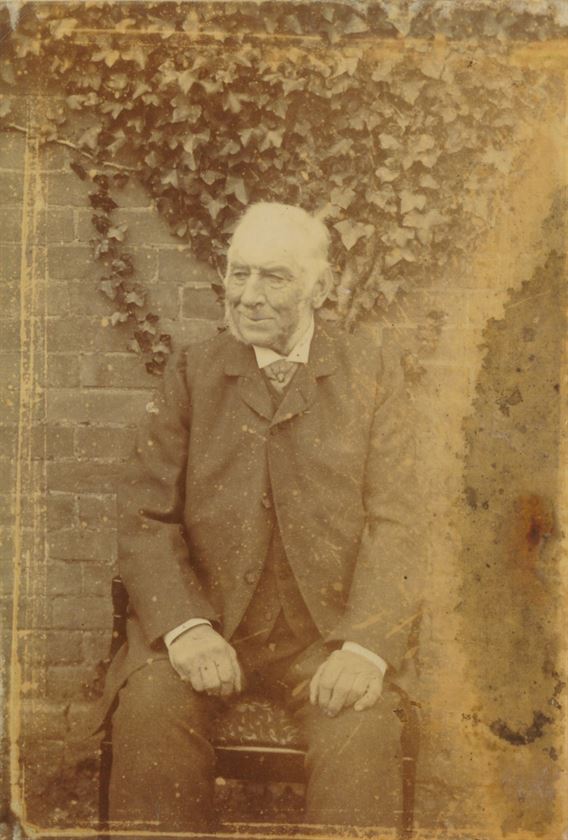
My father at that time lived at Beech House but farmed Lincoln Lodge about a mile and a half up Chapel lane, now Bridegate Lane .He had to get up at 5a.m. Put the pony in the milk cart, drive up to the Lodge, milk the cows by hand, and then take it to Widmerpool Station to catch the 7.30am train to Nottingham. For part of the year he’d bring it down to Beech House where mother would make it into Stilton cheese. I remember helping to ladle the curds and whey into the strainer, usually about 9pm. Some would be kept on to “Blue” and that meant turning the cheese over every day. When they were ready they were taken by horse and cart to Nottingham, usually on a Monday morning. However, during the First World War the miners would come out on a Saturday morning and buy the white cheese. A lot of hard work was done in the farm houses and remember there was no electricity, just coal fires and paraffin lamps which needed trimming. Also one or two boys would “live in” and at hay and harvest time meals would be taken out to the fields. I had to help with the pony in the trap, there would be a large basket packed with sandwiches, cakes etc plus a small churn full of tea waiting for me to come out of school. Then I had to drive along to Lincoln Lodge to the hay or corn field. They would have tea and then we would stay and help for an hour or two.
Tim Wright and family were employed at Lincoln Lodge and lived in the house there. Another good strong helper was Jack Cox who was good with the horses. They used to use Black Treacle in the cattle feed in the winter and one day they had fetched some barrels from the station. Rolling them out of the cart down a ladder to the barn when one of the ends gave way spilling treacle onto the barn floor. Jack and Tim tipped the barrel onto its end and started shovelling the stuff back into the barrel. Poor old Tim took a quick look to see how much had been retrieved when a shovel full from the hard working Jack dropped on his head. The treacle was sweet but not the language.
I think it was 1912, a very wet summer. We still had hay out in early October; Jim kept a diary on the barn door —July 1st raining, July 2nd raining, July 3rd raining and so on until the last day of August when instead of putting rain he put “a Bloody Wet Day”
All the work on the farm was done by horses and great pride was taken in both the horse and tack. One time I ploughed down the drive one Saturday. With 3 horses in a string, Kitty in the front, the weaker one, then Beauty, in the middle and Dan, the very strong one at the back as he had to pull the plough out at the end of the furrow by himself. Some times in the spring when the mares had got a foal it would be allowed to follow the mother in work up and down the field. The mare was more contented this way and not so worried about the foal as it was if it was left in the stables.

I remember one very laid and storm broken crop of wheat. They tried to binder it one way but it took a lot of the heads off so they used a back delivery device on the grass mower. It seemed too much for the horses with two big men on so they put me on to try. You had to press a pedal with your right foot and let it go, at the same time push the sheaf off with a special rake. It was like circling your head with one hand and patting it with the other. I’d bitten my tongue before I got the hang of it. This was then followed by someone tying the sheaves with straw bands and then stooking them. Later when dry they would be carted to the stack and afterwards put through the threshing drum, a far cry from the present day combine harvester.


Living at Beech House it meant a lot of journeys had to be made up Chapel Lane, past Mr Woolley’s Farm, Barlands Fields. I would often see his youngest daughter working in the fields, very often plough driving for William Burton or a chap named Flin. I little thought that one day she would be my wife but I am proud to say that is how it worked out.
As there were no motors on the roads it was the custom to let the lanes for grazing. Collishaws mostly took the Chapel Lane as they had fields up there. This meant some of the young ones tending the cows. Lucy took her friend Maggie Simpson. This was a good opportunity for Wilf Woolley, Parr and myself to go and help, if it was help. I wonder if they remember the fun we had, I certainly do. I remember singing a duet at school with Lucy at the school Concert.” where are you going to my pretty maid, I’m going a milking sir she said’—not tenting.
The Harrimans kept the Post Office & Shop and also made bread in the bakehouse up the yard. We would all run to the school railings to see Messrs Gillot arrive with the flour This was because of the Steam Wagon as most of the haulage was by horses and most of them were scared to death of this thing. About all the tradesmen needed were in the village.
Sheltons were Blacksmiths
Burnetts were builders, wheelwright and timber merchants. They had a steam saw mill capable of handling large trees. Also an old hand saw pit. One man on top and one in the pit with a cross cut saw about 7 ft long and a handle at each end. They also did most of the undertaking.
Fred Shelton was the tailor
The Simpsons were the Butchers
Copleys were Saddlers and also did some carrying. At one time I saw them set off to Nottingham with three horses in their carts, Richard driving one and his sons Archie and Frank following loaded with produce.
Gersham Parr was a painter and decorator filling in sometimes in the winter with Pig killing. Some of the Corners, my ancestors, were Shoemakers.
The cobbler was a man by the name of Watchorn, who lived in a hut in the navigation yard [the Canal Basin} His nickname was Crutchy as he only had one leg. He mended shoes and boots in his hut and he also had a rowing boat on the canal and in the summertime took parties for trips on the canal.
On the canal horse drawn barges unloaded their goods in the wharfyard, chiefly stone and coal. Just one horse on the towpath could pull a large long barge full of stone. They must have been a good many tons but they pulled it with ease. The barge people had living quarters on the barge and the men unloaded them with shovels and wheelbarrows. One in the bottom would throw the stone up into the barrow and the other chap would wheel the barrow up a gangplank and tip it in a heap in the yard. This was quite a balancing feat to push a barrow load of stone up a plank that was springing up and down with the weight.
It was all horse and trap to get to town. This was fairly regular work for the driving pony. Monday morning there was a load of cheese to Nottingham market, Tuesday Melton Mowbray market. Wednesday perhaps was off Thursday sometimes father would drive to Bingham where he served on the Parish Council and he was also the rep on the District Council. Then Saturday into Nottingham again.
One Saturday we were to meet my cousin John Dickman from Sheffield. He used to spend part of his holidays with us. When we were ready for home we were waiting in the Norfolk Hotel yard with the pony already in the trap. With four of us there were two sitting facing the pony and two sitting facing the other way. That was all right but when father appeared he was leading another pony that he had bought. So John and I had to hold the rope from the new one so he’d run behind. She was a very nice spirited pony and behaved very well till we came to the railway bridge at Plumtree. We lads had, by this time, tired of holding the lead so we wrapped it round the back of the front seat. Perhaps this was a good thing because on approaching the bridge the pony took fright and stood on her hind legs. Being fastened to the trap she had to come sliding through the bridge. Had we been holding the rope I think we would have been pulled out and ended up on the road. However we ended up at home without any other mishaps.
We named the pony Daisy and she proved to be one of the best. After doing duty in the trap for a while and that meant driving to Nottingham on Saturdays. Other farmers would sometimes do a bit of racing and she could compete with most. When I started riding Daisy she was my first mount. After a quiet pony I had before I had a lot of fun with her hunting and at gymkhanas. She also bred very good ponies later.
I was about 12 or 13 [about 1918 | when I fancied keeping a few hens of my own. Capt. Stewart Smith was said to have some very good White Leghorns so off I went on my bike to find the place. It was across fields on Keyworth Hill Farm, Kinoulton, way across and nearly at Colston Bassett. Trying to cycle across a muddy field and trying not to damage a sitting of very special White Leghorn eggs was bad enough but doing it in a snowstorm was something I’ll not easily forget. However they were hatched and they were the start of my interest in Pedigree Poultry. This was about the time I started to ride hunting with the Quorn with Archie Copley, Billy Green and a few more pals. Lord Daresbury was the master of the Quorn. Very often the Prince of Wales [Later King Edward VIII] was out with them but we had a job to keep up with him.
In summer we often competed in local Gymkhanas and Des Chandler would be there with his very good pony called Winkly Pops. We had no chance of winning against him, he put the same effort into his business interests as he did in his sport. That is shown by the fact that he was the founder of the now large firm of Chandlers of Grantham with branches in many places. I had much contact with Des and later we were both in the Day old Chick business. And he was a lifelong friend. Also my daughter married his cousin, Peter, so we have a close connection to the Chandler family.
When WWI broke out in 1914 some of the boys that were of age enlisted and others were soon conscripted along with much of our best horsepower. It all seemed very exciting at first but as one and then another boy was reported missing and then killed the gloom came over the village. This was not to take away the determination to see the thing through to a successful conclusion, everyone was doing some form of voluntary work.
The pattern of farming changed and more arable crops were grown. We lived at Beech House in the village but my father rented the 160acre Lincoln Lodge Farm one and a half miles up Chapel Lane. One Saturday my father tried to get old Shot, the odd job man, to go and help as he was a bit short handed with the sheep. Now Shot was very reluctant to go out of the village boundary, he had not been known to go beyond his set limits. Father thought he had done well to get him in the float, apparently willing to go. We had just got out of the village and Mrs George Squires was walking up the lane to see her relatives who lived this side of Lincoln Lodge and father stopped to give her a lift. When we got to the gate of the allotment gardens, called the Bridegate gardens, old Shot said he would have to get out answering a call of nature and popped over the gate. As Mrs Squires was on board father drew on a bit to wait but when he looked back old Shot was getting over the fence into the next field on his way back to his set boundaries.
When it came to military Service old Shot was never to be found. He made a hideout in Sherbrook Fox Covert. Somehow they got to know about it and sent some Military Police to arrest him. He did some sort of service for a short time when he was then discharged. He came back all smartened up with a new suit but soon got back into his old ways.
My father once remarked on passing Woolley’s fields when Doris was ploughing, “That’s a rare good lass to stick to that job in all weathers.” l don’t think that had any influence on my choice of girl friend but she did some years later become my wife. What it did was to give him the idea that I should go ploughing for Jim Wright on Saturdays or Holidays but not on Sundays, only looking after the stock was allowed on Sundays.
As the war went on they often came and commandeered the work horses. They took one of ours which was one of Jack Marson’s favourites and he was greatly troubled at losing her but later he himself was conscripted.
Then there were Zepplin raids and reports of escaped prisoners. Father, being a Special Constable was often out on night duty. Once two lots of Germans were on the run at the same time and all the specials had days and days searching buildings and woods. To encourage them there was a reward offered to anyone who found them. One evening Mr Woolley, who wasn’t a special Constable, was driving up the lane and saw them drinking at a spring. He stopped and asked what they were doing and they gave themselves up. He drove them to Widmerpool Station and phoned the police and they duly collected them. And he got the reward. We often joked about that afterwards.
When peace was signed in 1918 there were lots of celebrations. Tablets were put up in the Church and Chapel with the names of those who served and those killed in action. And also on the School wall. Included in the names were those of the three Simpson brothers and Donny another brother who was a cornet player was called upon to sound the last post and reveille, that must have taken some doing. Some who came back had some interesting stories to tell about their experiences overseas but others were reluctant to say much about it, no doubt wanting to forget or not remind themselves of the things they had been forced to see and do.
My mother was keen for me to learn to play the piano so I began lessons with Mrs Crump, the Station master’s wife at Widmerpool. Having to get there on my bike was a bit much in the winter and I don’t think I was getting on very well so I changed to Mrs Dora Collishaw who gave me lessons at home. Poor Dora, I wasn’t one of her best pupils. I’ve not quite forgot all she taught me but I will never be a Russ Conway.
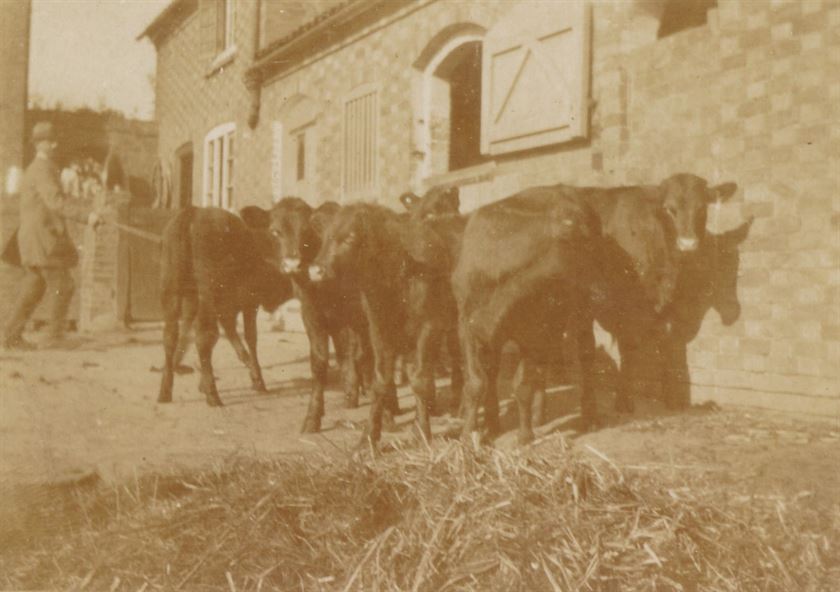
About this time Lincoln Lodge was put up for sale It belonged to the Dean and Chapter of Lincoln Cathedral, hence its name. As I got older I always thought it was a mistake of my father not to have bought it. I have no doubt that he would have done but for his health, he had heart trouble. So it was sold and father had to have a sale of his stock and machinery. Here are some of the items sold and the prices made Implements.
- Horses
- Diamond 90 Guineas
- Beauty 69 Guineas
- Sheep
- 11 Longwool Hogs 59 Shillings each
- 6 Cows
- Red Heifer 51 Pounds
- Red Heifer 48 Pounds
- Red Cow 41 Pounds 10 shillings
- Ditto 50 Pounds 15 Shillings
- Ditto 50 Pounds 5 Shillings
- Red Heifer 36 Pounds 15 Shillings
- Implements
- Grass Mower 17 Pounds 15 Shillings
- Set of Shaft Tackle 5 Pounds
- Heavy cart 20 Pounds I0 Shillings
- Harvest Wagon 11 Pounds 15 Shillings
Mr Woolley bought the wagon and it was used for years after. I went round with the auctioneer at the sale with book and pencil booking them down. The auctioneer said “what are you doing boy?” and I said “booking the prices down” and he then said we could do with a boy in our office will you come . Well I was never a good speller at school; I only managed to get my dictation right once. Father said he would give me ten shillings if you get your dictation right. I managed it once but an auctioneer’s clerk was not the job for me.
End of Reel One
With two fields of his own around Hickling father partly retired with a few cows and casual help. After some time even this proved too much for him and he had several heart attacks, in fact the doctors said he wouldn’t live but with care he survived a good few years. With him being so ill for my last 18 months at school I was allowed to go half an hour late in the morning to allow me time to help Charlie Parker milk the cows and feed them. By this time the question of what I should do when I left school was being asked. I spent quite a bit of time with Albert Burnett in his Joiners shop in Mr Harold Burnett’s yard. I really fancied my chance at being a carpenter or joiner. That was until one day he was making a coffin and asked me if I was coming with him to help fix the corpse in it. That was it for me as a joiner. I gradually switched my attention to the wheelwrights shop in the same yard run by Harry Swathwaite. What Harry could make with the help of my cousin Tom Monks, from a log of hardwood was unbelievable, not mass production but real craftsmanship. Then there was my friend Archie Copley, a bit older than me helping his father in the saddler’s shop. This looked a nice job on a cold day, stitching away with the lovely smell of new leather around. Still not for me. I suppose being the only son and with my father being so very ill I was dropped in at the deep end and told to swim, more a continuation rather than choice of occupation. However I have no regrets and the interest in and an aptitude for joinery work has stood me in good stead particularly with the poultry side of farming.
My first experience of market trading was at about 15 [1920] and we wanted another cow to keep the milk supply up. Father not being fit suggested I went along to Melton market to get one. Not having done this before I was a bit nervous about taking it in so father said look out for Mr Joseph Cure who will give you good advice. So off l went, had a good look at the cows being sold and picked one. Then I tried to find Mr Cure. I hadn’t found him by the time the cow was due to be sold so I summoned up courage and bought it. When I eventually found him and told him he came and looked at the cow, whether he didn’t want to discourage me or not I don’t know but he said “If you always buy ones like that you won’t go far wrong”
All through my childhood up to the end of WWI my mother made Farmhouse Stilton Cheese. How she got through the work with only the help of a girl I do not know, there was usually a boy living in and all the cooking and other household work, oil lamps to fill and trim, coal fires for heating and cooking, no electricity, no piped water or washing machines in those days. Wash day was done with a dolly tub and I often had to spray the rose trees with the suds to stop the greenfly and swill down the yard. It seemed a big yard then but as I pass now and take a look it seems much smaller. Mrs Robert Parr who lived opposite was often doing hers at the same time She always wore “pattens” for that job. These were wooden soles with metal rims like horse shoes and made quite a clatter as she worked.
Having left school I decided to try and make a living at some form of farming and I kept a few more hens and some breeding pigs. I was able to rent some more fields of grassland and I kept taking up allotments as they became vacant until I had nearly all the field. By now I was getting too big for my pony so she was mated to premium stallions and bred some very good riding ponies. My father’s health gradually improved and we strung along together for a good few years. I now had about 9 acres of ploughed land in the Parson’s gardens with only one good working horse so I went to Melton and bought a very good mare off Mr Baxter of Langar to make a team for grass mowing, ploughing etc.
Most of the coal and some of the feed for the cattle came from Widmerpool or Old Dalby Station. We had to take a railway truck full of Mangles, Coal, and sometimes Straw, and this had to be cleared in a few days. I have fetched as many as three loads a day with a horse and cart and we made time to trim the mare with a few ribbons etc. I mostly fetched a load of coal for my grandmother Doubleday when she required one and she loved a good horse. Her yard was a bit difficult. You had to get across a soft patch and swivel on to a cobbled path, stop sharp and back it quickly to get anywhere near her coal place. Dot, my cousin, who lived with her said grandma would stand out for a long time to watch the mare do this and then say “my Fred, that mare is a good one to do that with a ton of coal on” and give me a few sugar lumps to give to her.
We were milking cows at that time in a building in a field called “Holland Cliff’ about half a Mile up the Green lane. We went up with a horse and float but several smaller farmers with a few cows would go up pushing small carts and churns on wheels. One was Mr A Shelton. He went up the lane 2 fields further singing and whistling mostly hymns. I suppose he was keeping in practice as he was a regular in the Methodist Chapel. There was also a Mr Tom Rose who went halfway up Green Lane He was a very friendly man and a very good hedge cutter. At night he was the village barber. He cut my hair. It must have been a bind for him after a day’s work to cut hair in the evening in the living room.
Quite a few in Hickling made use of churns on wheels. Mr Jacob Allen the Baker had a few milking cows in a shed belonging the Rectory. He went up and down morning and night. He and his wife Dot kept the post office and shop. Also William and Wally Parkes, you could set the clock by them they were so regular. Sam Drape milked in a field down Clawson Lane, he was another who sang while milking and you could hear him back in the village if the wind was right
Haymaking was hard work in those days for men and horse. No tractors or balers. First it was mowed by horses, and then turned two or three times. When ready it was rowed up with a horde rake and then either built into cobs with a horse and sledge or picked up onto a dray and carted by horse and dray and pitched onto a stack by hand. This meant long hours. Often the local trades people were called in to give a hand in the evenings and two or more farmers would join up to make a better team although the trouble with that was whose hay should be done first if the weather was tricky. When stacked it had to be trimmed up and thatched with wheat straw. There was some competition to see who made the best job. You got teased if you made a mess of it. Then there was the roadside hedges had to be trimmed with a slasher. I always thought that this was very hard work; perhaps my slasher wasn’t sharp enough.
Around this time in my life, as most boys do, I started to take an interest in the girls. Christmas parties were the done thing then and I was invited to a good many of them .It seemed a bit more exciting when the girls were there, especially with games like “Postman’s Knock “‘ and the guessing games when you had to go out of the room with a partner. One very good party where there was always good food a friend of mine was very fond of trifle. Seeing a nice trifle on the table you could see he was looking forward to it. Unfortunately the one serving the trifle started at the other end and was giving too large a helping and it ran out before he could get served.

During the next summer I was at work in the field by the front garden when three young ladies drove past in a horse and trap. I think it was just to have a glance and hope to have a chat. They drove into Melton every week at this time and it was Doris, Gertie and Dora Collishaw. They went for singing lessons with Dr Malcolm Sargent no less. It was the young one, Doris, that I fancied my chance with. They were happy days, not being too involved but having a good look round. We were hay making in our field next to Mr Leonard Woolley and a friend of mine was helping. He was on the load and I was picking. He saw someone in the next field with a red hat and said “who is that” l had a look and said it was Mr Woolley’s sister. I said Miss Woolley and he said he would like to take her out. I realised I had some competition for that was the one I had my eye on and Sydney had the advantage on me in that he went to Chapel and I went to Church, being in the choir. So, not to be out done, I missed Church next Sunday and popped into Chapel. After the service I was in luck and I was the one to take Doris home that night complete with red hat. And that was most Sunday nights for the next few years
After a few weeks it became known to Mr and Mrs Woolley and I got the idea that they were not altogether pleased so I asked Doris and she said it was alright and she wanted it to continue so I thought I would sum up courage and ask. I know Mr Woolley was very fond of riding horses having served with the yeomanry so I brushed up the pony and set off. I was told he was down the field fencing. When I did find him he said “Now young man” and started to admire my pony, which pleased me. He was always one to get on with his work so he said ” what brings you here at this time of day ” I thought I’d chosen the wrong time so I said quickly, “you know that I am very fond of the company of your daughter so I would like to know if you have any objections” The reply was a bit coming and then he said “No boy I have no objections if Doris hasn’t. I think you are a bit young but you’ll get older with keep.
I have often wondered what I’d have done if he had said no. After that it was all plain sailing and the next week I was asked in for supper. Mrs Woolley was always a great friend of mine as was her sister Gertie. It was always a home from home. Most of the entertainment in those days was what you made yourself either round the piano or games. One game we often played was “Tippet” where you passed a farthing or small dice hand to hand under the table. The caller called Tippet and the one with the dice had to hide it in his hand and the caller would ask them to spread their fingers to try and guess if they had the dice, eliminating the hands he thought it wasn’t in. It may seem a simple game now but we had a lot of fun playing it. You mostly chose to sit next to someone special and a bit of fun went on under the table pinching hands and knees of the near players.
In the summer it was outdoor games such as rounders. We started to make a tennis court on a bit of waste land near the garden. The two girls did the most of it. I got a load of topsoil but they did a lot of the hard work. We had many happy hours playing on it .One of the regular jobs which had to be done was to shut the hens up. This meant a long round the fields. Doris and I usually volunteered for this and we enjoyed doing it. There were one or two convenient stopping places and the stops sometimes took longer than the shutting up. One night we saw a heifer in a pond which was fast in the mud. I got over the fence to try and get it out not knowing it had a calf. She was nasty as I managed to get her out and she put her head down and chased me to the fence. I just managed to clear fence. She was defending her calf. One of the unexpected hazards of courtship. I’d always been friends of Doris’ younger brother Wilf and someone had given him a pony. It seemed a quiet one but when you got on him he would swing round and round and tip you off. When I tried to ride the thing it threw me off time after time and we had to give it up as a bad job. Wilf remained a lifelong friend and later we became partners in the firm “Dickman Woolley & co. Ltd”. He was everyone’s friend and no one’s enemy.
There was a man down the village who bought a Ford car. I became very interested in this car and he let me have one or two goes at driving it on a quiet lane. The accelerator was on the steering wheel, operated by hand. I think it must have been an early attempt at an automatic. There was only one foot pedal how it worked I don’t know but it did. The wheels were wooden spokes. I was old enough to drive and I persuaded my father to get one. It was getting more and more dangerous to take horses on the main road as they were getting tarmac and quite a few cars about. Pecks at Long Clawson were sub agents of Shipsides whose Garage was just outside Nottingham. Shipsides had connection with Hickling and had the Blacksmiths in the village.
So off we went with Mod Peck to look for a car and decided on a blue Singer with let down hood and perspex side screens. I impatiently waited a week or two for delivery when one night about 6.30 pm Horace Peck called and said the car had arrived and would I like to have a driving lesson. So off I went, put straight in the driving seat, told a few things what to do and away we went up Chapel lane thinking we would be going round by Upper Broughton. But Morris said no, turn right and on to the New Inn it was called and then left and down the Fosse Way. I said “:where are we going ?” and he said “never you mind, you are doing fine” We arrived at the outskirts of Leicester. Not too far along he asked me to turn right and stop at the street lamp, as he wanted to call at a house. After about ten minutes he came out with his girl friend. I found out after that she was due for a weekend off and she was later to be Mrs Peck. She got in the back seat and when we had driven clear of Leicester Mod got out and went and sat in the back with his girl friend and told me to drive on. Reluctantly I did as I was told and then he said don’t bother what we are doing you just drive on. We arrived back at Long Clawson safe and sound and I thought he would let me get off at Hickling and he would take the car home to Clawson, but no, after I’d driven him and his girl home he said ” Now I think you can manage to drive to Hickling, you will be alright ” so off I went. I was 0K to Hickling and into the yard at Beech House but the garage was an old trap house and was difficult to get into so father and I had to push it in. When I told them what had happened they didn’t think much to the proceedings. That was the one and only driving lesson I ever had. [1924] No driving test then and not many cars on the road. I was 19 and a half. Next morning I wanted to try my hand at driving again so told my father I would go shepherding in it. First I had to start it with the handle. I thought I had done everything I had to do and turned and turned but no response. It would not start. We had about given up when mother suggested asking Horace across the road. He was at home and she said he knew something about cars so I popped across and asked if he could help, He came over and looked under the bonnet, put his hand in and said “you will go now Fred” and walked off saying “You know you have to turn the petrol on“. I never forgot that again. It wasn’t that I had lost my love of horses that made me want a car but times were changing very quickly. Getting to town was quicker and the main roads were all being tarmacked over and the horses slipped a lot. We were about the first farmer in the village to have one. Edgar Burnett had a 3 wheel Morgan. He lived on the corner of Clawson Lane. He was an Architect and Horace Burnett the Insurance Assessor had a motor bike. His sister Eadie was the School Teacher. Only Harold carried on the family business of joiners, builders and timber merchants. They were Doris’ cousins and we had a lot of fun together. Skating on the canal one year lasted for several weeks and we carried on a bit too long when the ice was getting weak and Horace went through and got soaked.
One Christmas time on Boxing Day morning we made 3 sledges to hold 3 or 4 on each one and in the afternoon set off to Worthingtons field called Muxloe Hill nr Upper Broughton. It is very steep and there was a good covering of snow. There was a brook at the bottom with a bridge into the next field. We had to try and hit the bridge and go through the gateway. One of us stood at the back with the ropes and steered and if not accurate we ended up in the brook. Mostly they fell off before reaching the brook. Mr Willie Burnett, father of Horace said he would like a go and stood on the back to steer. Heading for the brook at great speed I bailed out and Willie ended up on his stomach and in the process lost his watch, it was never found
Being the only car in the village I was pleased to help anyone ill and sometimes took them to the Hospital. I took Ellis Faulkes to Hospital, he was very ill but it was impossible to get to the farm with the car. I went as far as I could and they brought him to me rugged up on a horse and cart It was appendicitis we got him there 0K .Another time with Mrs George Squires to Nottingham General with the same problem. We hadn’t had the car long before Canon Ashmell asked if we could do his fetching and carrying. Only a few years earlier he had Albert Simpson as his coachman driving his horse. Albert sat at the back with his whip and brass buttoned coat. When I took the job on I didn’t know what it entailed. He was a rural dean and went to many meetings and I must admit I enjoyed it. Often he would go to Southwell Minster or play a round of golf. I had to take him to Widmerpool Station and then pick him up later in the day. He also gave talks to the Mothers Union in the villages all around. This was quite a rewarding diversion from farming.
Not long after we had the car Mr Woolley ordered one, a Bull nosed Morris. He asked me to give Doris a few driving lessons. She had been on a few trips with Horace who let her drive on his assessment trips, so she quite soon took to it. The first long run we had I well remember. Mrs Woolley was staying at Skegness. Doris, Gert and I had to fetch her back so off we went in the new Morris. And we didn’t know that this model had been turned out with faulty rims. We had a puncture on the way there and I managed to put the spare on. However on the return journey we had no end of trouble and had to get new tyres on anywhere we could. And we were about broke for cash. Once the tyre came off and ran down the road in front. It was midnight when we got back doing the last few miles on flat tyres. When the fault was put right it proved to be a very good car, one of the best Morris cars turned out
Joining up for hay making, who better than with Mr Woolley and of course Doris. We had two farms, one not very good with a grass mower but the other reasonably good for other work. Mr Woolley had a good mare, Molly who was a joy to work with. And we matched it up with ours in the mower. Bob Burslem was the Wainer at Barlands Fields. He was to hire a good pair of Shires. Bob and I did most of the grass mowing If the weather was good, we would sometimes go off at 4 am and mow till about 9.30 take off and give the horses a break and some food and have our own breakfast ready to do a day’s hay making.
Doris and Gert would do the turning, horse raking, and then we would either sweep it or cob it if the weather was unsettled. If fine we would cart it to the farm yard and stack it. There was a good deal of skill needed to build a stack. No balers then. Often we used a pole to get the hay onto the stack. It was a huge pole held up with guy ropes. A rope ran through a pulley at the bottom to one at the top and another pulley on an arm which could be raised as the stack got higher. A grab at the end was stuck into the hay and a clip caught it. When the horse pulled it up the arm swung over the stack, a swift pull on a thin rope attached then released the hay onto the stack back went the horse to lower the grab and get another load. It was a lot easier than forking by hand but still a lot of work on the stack. In good weather this went on till sunset. If the hay had to be carted home it was a slow hard job so a lot of hay was put into stacks in the field where we used a horse and sweep to the stack and then used the grab again at the stack
Tea was usually brought into the field and we were pleased to see that on a hot summer day. But it was lots of work for the ladies. After tea one or two of us would have to leave the work and go to milk the cows. Sometimes Doris and I would volunteer to do this. I was never too fond of milking but in the right company it seemed to make it a better job. All the Woolley family could milk cows and Mrs Woolley was a very good milker as was Mrs Burnett her sister, there were no milking machines then, all done by hand. Often they milked in the field which saved them from having to walk them to the cowsheds. The herd at Barlands was all Lincoln Reds. They were generally a calm lot but if the flies were about you would sometimes find yourself seated with a bucket between your knees and the cows gone with tails in the air and they took some settling before you could make a start [this was the “Gad Fly” which was eradicated in the 60’s]
After bedding down and doing a few yard jobs, feeding calves, pigs etc. it was usually too late to go back to the hay field. Not much time for courting ’till we went to shut the hens up when we mostly managed a few minutes to ourselves.
Bob Burslem and another boy from Stonesby lived in at that time and when we had been mowing early I was asked in for breakfast. This was always assembly time in the Woolley household. Mr or Mrs Woolley would start by reading a short chapter from the bible and then followed a prayer, then grace. This was the practice in many households then, my father always read from the bible first thing in the morning, very often the same chapter, which I think he knew off by heart. He would go into his room with a cup of tea and open his old bible and this is the sound I heard from my bedroom
“He that dwelleth in the secret place of the most high shall abide in the shadow of the almighty I will serve the lord, he is my refuge and my fortress my god and in him I will trust. Surely he shall deliver thee from the snare of the fowler and from the noise and pestilence, he shall cover thee with his wings and under his wings shalt thou trust. His tree shall be thou shield and buckler. Thou shalt not be afraid of the terror by night nor for the arrow that flyeth by day nor for the pestilence that walketh in darkness. Nor for the destruction that wasteth at noonday. A thousand shall fall at thy side and then ten thousand at thy right hand. But it shall not come nigh thee. Only with thine eyes shall you see the reward of the wicked, etc. etc. He was very fond of the psalms and some of the chapters out of Job.
End of Reel 2
Reel 3
This courting business had been going on for a few years and I began to think about getting married. I was fed up with driving cows up and down to odd fields here and there. So father let most of his land and I gave up the fields I had rented and decided to take a compact farm somewhere. We looked at one at Newton owned by the crown that was mostly arable as was another at Clipston. I was not used to that type of farming so turned them down. We looked at a few more and then decided on a small grassland farm at Stathern and to concentrate on breeding pedigree Trap-nested poultry and some cows. I had already got a bit of a start at this so our big day was set for April 10th 1928. I took possession of the farm on 25th March 1928 so we took some furniture in and made the house habitable for when we got back from our Honeymoon. I engaged a casual worker for 3wks to do some jobs on the land and to look after the place till we got married
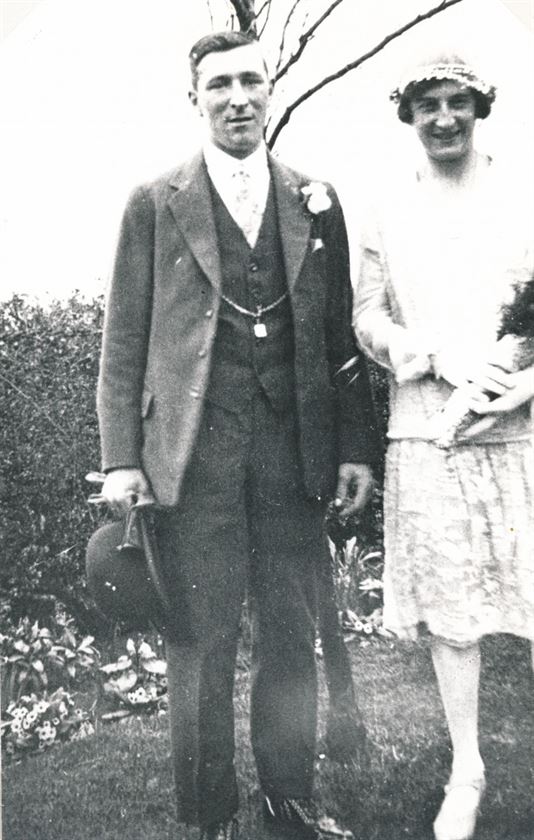
The wedding took place at the Hickling Methodist Chapel. My cousin, Tom Wiles was Best Man and his sister Eva and Olga Burnett were Bridesmaids along with Doris’ sister Gertie. Mr and Mrs Woolley had a large Marquee on the lawns of Barlands Farm for the reception. The honeymoon was at Llandudno and having taken the car we were able to tour around Wales. Looking back I’d say it was my best ever day as I had married the best wife and mother ever and had married into the nicest family possible to find. It developed into a lifelong friendship with them all and later into a happy business connection of Dickman Woolley & Co Ltd, Corn and Agricultural Merchants of Harby Mill. Sadly, Mrs Woolley didn’t live to see this development.
On arriving back from Honeymoon we decided to milk some cows and build up the poultry as well. Mr Woolley very kindly gave us two cows for a wedding present and I had already reared some heifers, so off l went to market to buy some more. I soon found out I was running short of cash so father lent me the deeds to one of his fields. I took these to Mr Green the Manager of the Midland Bank in Melton Mowbray. I found him to be most helpful and he gave me some sound advice and also allowed me sufficient credit to get some necessary equipment and some more cows. These had to be milked by hand and then the milk taken to the Wiltshire United Dairies at Harby. Mr Hudson of Hickling helped me cart and re-erect the poultry houses from Hickling. We set aside one small field for the breeding pens ready for the next seasons hatchings. I insulated one of the outbuildings for a makeshift incubator room and bought one or two large poultry houses to house pullets and trap-nest them.These of course were run free range
There was also hay-making to be done in the summer to feed the cows over the winter. Mr Hodson was a good help with this also Tom Pacey of Stathern. He was a chimney sweep most mornings and would come and help in the afternoons and evenings. He was a good help to me and could turn his hand to anything but not milking.
We started hatching in January the next year [1929] hoping to get as many pullets as possible. The Incubators were paraffin heated as there was no electricity. I had arranged with Mr Green of Stathern, who made electricity for Stathern, to give me a connection but being some way out of the village he had not managed to get it done. He had an engineering works and his main business was making stocks and dies. He had a large oil engine to make electricity for the village; this was before the East Midlands Electricity Board came along. His supply was eventually extended to Lodge Farm and was a big improvement on the oil lamps etc.
It came a very cold spell just after I had filled the incubators and I couldn’t get the temperature up It looked as if we were in for a complete failure with the first batch of eggs so we took them out of the incubators into baskets laid with warm blankets and as quickly as possible took the baskets to a back bedroom in the house. This proved successful and we had a reasonable hatch. We had only just got over this when calamity struck. There was a soot door on the end of the house and a very strong wind blew it off resulting in a cloud of soot all over the kitchen about half an inch deep. It was all over the floor and spread to other rooms and in the pantry ruining freshly baked pastries. First we had to get up a ladder and replace the soot door, this done clean up the hot soot which was everywhere. Mr Hodson was a big help and it made me realise that being married wasn’t all beer and skittles. I wondered what would happen next but we survived and put up a properly insulated shed for hatching the next year.
The next activity that was new to us was to prepare for the next member of the family. The list of things needed was endless and being the only one I wondered what they were all for. I soon found out. The birth was to take place at home with the district nurse to live in. She may have been a good nurse but was not much good at anything else. I for one was glad to see the back of her as soon as possible. The day it all happened the doctor was there and I was amusing myself in the barn making a night ark for the chicks. At 3pm Dr Woodward came out to me with sleeves rolled up. “Dickman” he says “you’ve got a daughter. The little so and so took some finding but she is a little smasher, all of 9lb”. All those years on and she is still a smasher and the living image of her mother. I shall never forget when I went to see the new arrival there were a few tears of joy. A moment you never forget. Then the grandparents wanted to see. My mother and father came in pony and tub. Gertie had learned to drive and could bring the Woolleys by car. When they came they stayed later than usual and it came down a thick fog. They trusted to the pony all the way and were quite surprised when he stopped and they found he had pulled up in their own yard in Hickling.
Both our girls were born at Stathern. Mary’s arrival was a smoother business with Mrs Hourd of Hose. We made a few friendly connections, Clamps and Fairbrothers were our neighbours and Eddie Wood at the garage did repairs and sold petrol. He had a small man, Jig brown, handy for getting under cars. Mary Mabletoff called each week eggs, Kathie Colbett helped us with the poultry and also Harry Howarth He later worked for Shoulers of Melton. The Post Office was run by Mr and Mrs W. Brown. Bill Swingler was the Blacksmith and Harry Swingler had steam driven threshing outfits. Mr Mercer was the wheelwright and joiner. Jarvis Jackson, a builder, helped me a lot for many years and after I had left Stathern.
One good friend of mine that I had known for many years from early pony riding days was Des Chandler. We often met up on Sunday mornings to talk about poultry. He would come to Stathern or I would go in the car and take Doreen with me as she got older. We’d go for a tour and see the incubator room. He lived with his father Mr and Mrs Fred Chandler at Redmile. Mrs Chandler was a very motherly woman and she would take Doreen into the house and she quite enjoyed having her for a short time. There were no seat belts in cars at that time and we used a long scarf to hold a child in the seat. Mr and Mrs Chandler were always very particular to see that this was tied safely before I left for home
Des, like me, had a lot of small incubators and just coming on the market were the electric cabinet machines, much easier to use with self turning devices and greater capacity in the same space. So we decided to go to the Poultry Show in London where we bought one each. This was a great relief not having to turn all the eggs 2 or 3 times every day.
We spent 6 years at the lodge, happy years but hard work getting established. Milk production and general farming in the 30’s was not very good and I think the pedigree poultry business helped us quite a lot. We often went over to Hickling and as we did we saw a board up Farm to Let at Highfield Farm, then named Hose Villa. We called in to have a look, liked what we saw and contacted Mr Harwood of Melton Farmers. We had I thought come to terms when he came down to see us and said the farm was not now for let but as I had shown interest in it, it was on offer to me for sale. I said that’s not good news as I was not interested in buying. However he said the offer was too good to turn down, you are a young man and you ought to take it up and he persuaded me to consult my father and Mr Woolley and ask their opinion. They both agreed it was a good offer and I should take it up. So I became a land owner with a good proportion of the money coming from the Ag. Mortgage Corporation on a repayment basis. It did prove to be one of the best things I ever did as the price of land has gone up ever since. I remember at that time asking Mr Fred Shouler what he thought the price of reasonably good land was and he replied, “the price of two fat bullocks my lad, and this value has not changed much over the years.
Tapes four and five relate to the family’s life in Long Clawson and don’t relate to Hickling.